The Strait of Hormuz is largely working right now. Container surcharges have hit $4,000 per box. Insurance premiums are through the roof. And if you're moving goods in or out of the Gulf, you already know that maritime shipping through the region has become expensive, unpredictable, and in some cases, simply unavailable. So, Saudi Arabia did something about it.
The New Corridor
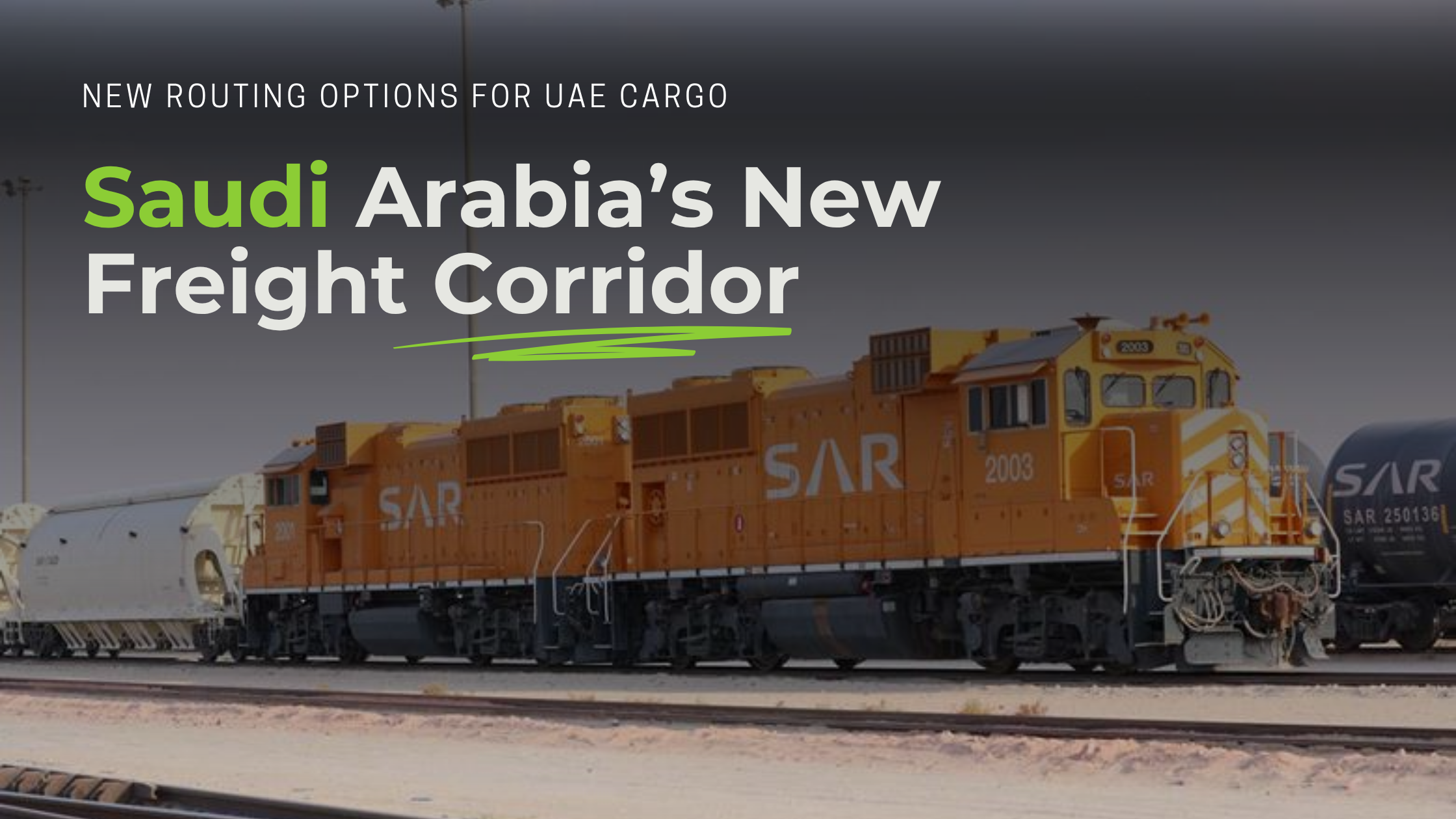
Saudi Arabian Railways (SAR) has launched a 1,700 km freight rail route connecting its major Gulf ports: Dammam, King Fahd Industrial Port, and Jubail, directly to the Al-Haditha border crossing into Jordan. From Jordan, cargo can continue to the Red Sea port of Aqaba and onward to broader regional and European markets.
The route runs in both directions, handles over 400 containers per train, and cuts transit times roughly in half compared to road freight. It uses existing SAR infrastructure, the North-South Railway, which means it's operational now, not in five years.
This is the first serious, large-scale land alternative to the Strait of Hormuz for container freight. And it changes the logistics picture for the entire region.
What This Means if You're a Shipping Company in the UAE
The Gulf-to-Levant trade lane is about to get competitive. Freight operators currently running cargo from the Gulf up to Jordan, Turkey, and northern markets, whether by sea-then-road or pure trucking, will face real competition from this corridor. Rail at 400+ containers per train is structurally cheaper per unit than long-haul trucking. Pricing pressure is coming.
The smarter move is to integrate, not compete. UAE-based operators who build feeder connections between Jebel Ali or Abu Dhabi and Dammam can position themselves as the bridge between the UAE and the SAR network. You handle the first leg and last mile; the train handles the heavy lifting in between. That's a more defensible, higher-margin play than pure trucking.
Routing redundancy is now a real product. Until recently, offering clients a credible alternative to Hormuz-dependent routes was largely theoretical. It isn't anymore. Shipping companies that can present a multimodal routing option: sea to Dammam, rail to Aqaba or Jordan, onward from there, can offer something genuinely valuable at a moment when clients are actively looking for exactly that.
What This Means if You're an Importer or Exporter Based in the UAE
You have options you didn't have six months ago. If your supply chain runs through the Gulf and your goods need to reach Jordan, Turkey, or European markets, the SAR corridor is a faster and increasingly cost-competitive alternative to the current maritime chaos. It's not a direct UAE solution, you'd need feeder logistics to get cargo to Dammam first, but that's a manageable extra step, not a dealbreaker.
Transit times to northern markets could improve significantly. The corridor's promise to halve road transit times matters most for businesses where delivery predictability affects client relationships or inventory planning. If you're currently absorbing delays and surcharges on the Saudi-Jordan leg, this route is worth a serious look.
The cost case will strengthen over time. Right now, pivoting to a new route involves coordination costs and unfamiliar logistics. As the corridor matures and more operators build connections to it, per-unit costs will fall. Businesses that start building relationships with SAR-linked operators now will be better positioned when that happens.
The Bigger Picture
This corridor is one piece of a larger regional shift. Gulf states are simultaneously investing in oil pipeline bypasses, expanding inland port capacity, and, as the announcement shows, using rail to reduce dependence on a single chokepoint that has repeatedly proven vulnerable.
For Dubai and the UAE, which have built a world-class trade hub around the seamless flow of goods, this trend is both a challenge and an opportunity. Jebel Ali remains dominant. But the regional architecture is quietly diversifying, and the operators who adapt early will be the ones who benefit most when it does.
The SAR corridor won't solve every problem the Hormuz crisis has created. But it's the most concrete, operational step the region has taken toward a more resilient trade network, and for anyone moving freight between the Gulf and northern markets, it deserves serious attention.
Frequently Asked Questions
If my cargo is coming from Asia into the UAE, does this corridor actually help?
Yes, but not on the main ocean leg into the UAE. Its value starts after arrival, when cargo needs to move from the Gulf toward Jordan or nearby northern markets with less exposure to Hormuz-related disruption.
What trade flows is this route actually useful for?
This corridor is most relevant for cargo moving from eastern Saudi Arabia into Jordan, with onward potential toward Aqaba and nearby regional markets. For UAE businesses, it matters most when shipments can be fed into Saudi Arabia efficiently and then moved north by rail.
What kind of cargo is best suited to this route, and how should UAE shippers plan for it?
It is best suited to containerized commercial freight where delivery predictability matters more than keeping the route simple. The route works best when the shipment is planned as one controlled multimodal move: feeder leg into Saudi Arabia, rail handover, customs alignment, and reliable onward delivery.